Chinese Inverters BANNED in 2026? What NEM 3.0 Means for CA Homeowners
The solar industry is buzzing with talk about potential tariffs and bans on Chinese-made inverters and batteries, especially as we head into 2026. This could significantly impact the cost and availability of solar equipment, forcing a shift in how systems are financed and what components are used. California homeowners, in particular, need to understand how these changes, especially under NEM 3.0, will affect their self-consumption strategies. Key Takeaways * Tariff Increases: Expect a 15% d
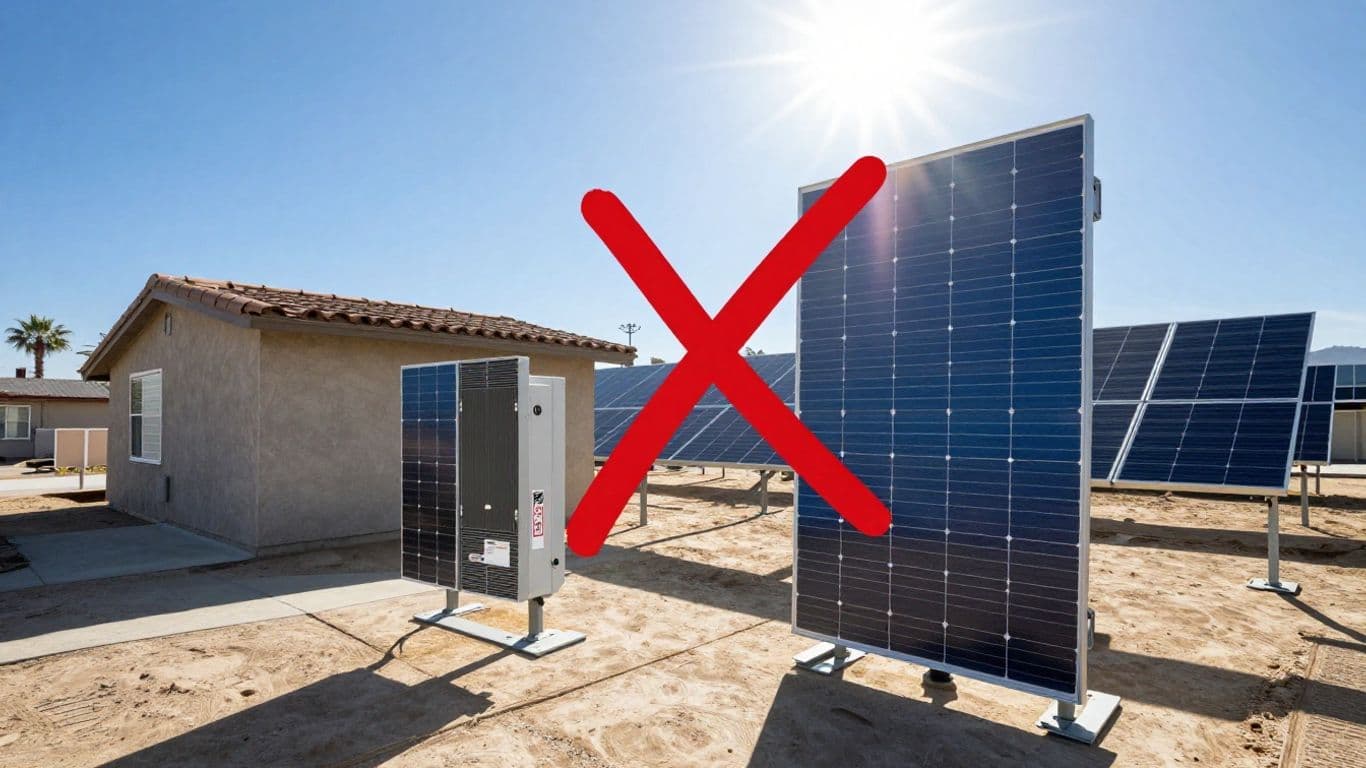
The solar industry is buzzing with talk about potential tariffs and bans on Chinese-made inverters and batteries, especially as we head into 2026. This could significantly impact the cost and availability of solar equipment, forcing a shift in how systems are financed and what components are used. California homeowners, in particular, need to understand how these changes, especially under NEM 3.0, will affect their self-consumption strategies.
Key Takeaways
- Tariff Increases: Expect a 15% duty increase on batteries made with Chinese cells starting January 1st.
- Potential Bans: There's a push to ban Chinese inverters entirely.
- Enforcement Concerns: The effectiveness of current tariff enforcement on batteries is questionable.
- Financing Shifts: Exotic financing like prepaid PPAs and VPPs are becoming more common, but come with risks.
- Domestic Content Push: Companies are investing in US-based manufacturing and supply chains.
- Battery Focus: The future of solar incentives leans heavily towards battery storage.
Navigating Solar Policy Changes and Tax Credits
The solar policy landscape is always shifting, and 2026 brings new considerations, especially regarding tax credits. While the 25D tax credit was a big deal, its sunset and the rise of corporate interests in leasing structures have changed the game. For homeowners, this means understanding how these policies affect the overall cost and benefit of going solar.
One strategy emerging is the use of safe harbors. These allow companies to utilize 2025 tax credit rules for hardware and finance deals finalized before the end of the year, even if installation happens later. This can create a temporary bridge, especially for companies with high Chinese content in their products. However, this is expected to be a short-term fix, likely petering out by Q2 or Q3 of next year.
After the safe harbor period, the reality of no tax credit for homeowner-owned solar will set in for many. This is where new financing models like prepaid PPAs (Power Purchase Agreements) come into play. These structures allow a tax equity vehicle to temporarily own the system, monetize the tax credit, and then transfer ownership back to the homeowner. While this could benefit homeowners who don't owe taxes, there's a risk of these deals being structured improperly.
Adding to the complexity, the solar tax credit itself is set to drop significantly starting mid-2026. It will decrease by 40% and then another 40% the following year, eventually phasing out. This makes focusing on the battery tax credit, which extends to 2032 and isn't diluted, a more attractive long-term strategy.
The Rise of Battery-Centric Solar Systems
With the solar tax credit declining, the battery tax credit becomes paramount. A key strategy is to collocate batteries with solar systems. This allows homeowners to shift soft costs, like permitting and labor, onto the battery system to maximize the tax credit. The solar portion can then be sold at a lower cost, potentially even at or below material cost.
This battery-first approach is likely to drive much higher battery attachment rates. As the solar tax credit diminishes, the inherent value and extended credit for batteries make them the central component of new solar installations.
Understanding Exotic Financing and Its Risks
The solar industry has seen a surge in creative and exotic financing options. While these can sometimes lead to lower upfront costs for homeowners, they also introduce complexity and counterparty risk. Structures like prepaid PPAs and Virtual Power Plants (VPPs) are becoming more common.
A prepaid PPA involves a homeowner locking into a long-term agreement, often with a third-party entity that manages the system and benefits from tax credits. A VPP, on the other hand, allows homeowners to earn revenue by allowing their battery storage system to be used by the grid. While these can offer financial benefits, they also come with risks:
- Lease Company Stability: The risk of the financing company going bankrupt, as seen with some solar lease companies.
- VPP Revenue Uncertainty: The projected revenue from VPP programs may not materialize long-term, as grid needs and battery costs change.
- Misleading Sales Tactics: Some sales teams may overstate VPP earnings or the duration of net metering agreements, leading to homeowner disappointment.
For instance, in Texas, some solar systems were sold on 25-year loans with the assumption of 25 years of energy savings, but the net metering agreements were only for one or two years. This mismatch can leave homeowners paying for a system with significantly reduced benefits.
VPPs: A Bubble or a Benefit?
Virtual Power Plants are essentially a subsidy for batteries, paying homeowners for providing grid services. However, the value of VPPs is tied to the number of batteries on the grid and their cost. As more batteries come online and costs decrease, VPP revenue is likely to decline. This means that projections of long-term VPP earnings can be misleading.
A responsible approach to VPPs might involve a principal prepayment structure, where VPP earnings are directly applied to the solar loan. This provides a more realistic benefit to the homeowner without over-promising future returns.
Tariffs and the Future of Chinese Components
Tariffs and import regulations are a significant factor, particularly concerning Chinese-made components. There's a growing movement to ban Chinese inverters due to national security concerns, similar to the "Huawei problem" in telecommunications. This could drastically alter the market for new entrants.
Furthermore, battery tariffs are set to increase by 15% on January 1st. This applies to batteries made with Chinese cells, whether manufactured in China or a third country. Enforcement of these tariffs is also a concern, as some companies may attempt to devalue their imports to avoid higher duties.
What This Means for CA Homeowners Under NEM 3.0
For California homeowners operating under Net Energy Metering 3.0 (NEM 3.0), the focus is heavily on self-consumption. NEM 3.0 significantly reduces the export rate for solar energy sent back to the grid, making it more financially beneficial to use the solar power generated on-site. This is where battery storage becomes almost imperative.
With potential tariffs increasing the cost of batteries and the solar tax credit phasing out, the economics of solar + storage become even more critical. Homeowners need to maximize their self-consumption to get the most value from their system. This means:
- Prioritizing Battery Storage: Investing in batteries to store excess solar energy for use during peak demand hours or when the sun isn't shining.
- Smart Load Management: Utilizing smart home devices and appliances to shift energy usage to times when solar generation is high.
- Understanding VPPs: Carefully evaluating VPP programs, understanding the risks, and ensuring projections are realistic, especially given the focus on self-consumption under NEM 3.0.
The changing policy and tariff landscape, combined with NEM 3.0's emphasis on self-consumption, means that battery storage is no longer just an add-on but a core component for maximizing the financial benefits of solar for California homeowners.
Technical Shifts: From 48V to 100V Architectures
The industry is seeing a technical evolution, moving away from the traditional 48V architecture towards higher voltage systems, like 100V. This shift is driven by the economics of battery cells and the desire for increased efficiency.
- 48V Systems: Historically dominant, especially with lead-acid batteries. Still relevant for smaller systems or upgrades, but less efficient for higher power demands.
- 100V Systems: Offer improved roundtrip efficiency by reducing voltage conversion losses. They allow for larger, more cost-effective battery packs and are better suited for modern demands like EVs and VPPs. Companies are developing native 100V batteries and inverters to optimize this architecture.
While 48V systems will likely persist for some time due to existing infrastructure and consumer preference for smaller systems, the trend is clearly moving towards higher voltage architectures for new, high-performance installations.
Preparing for 2026 and Beyond
As we head into 2026, solar industry professionals and homeowners alike need to stay informed. Key considerations include:
- Hardware Stack: Evaluating the cost and compliance of hardware, especially with potential tariffs and domestic content requirements.
- Financing Models: Understanding the risks and benefits of new financing structures like prepaid PPAs and VPPs.
- Battery Focus: Recognizing the increasing importance of battery storage due to tax credits and self-consumption needs.
- Honest Customer Conversations: Maintaining transparency with customers about the benefits and risks of different system configurations and financing options.
The next five years are expected to be dynamic for the solar industry, with potential short-term hiccups but overall strong growth driven by the ongoing energy crisis and the demand for reliable power and backup solutions.
Keep reading
Nvidia: The Unseen Engine Driving Our Autonomous Future
You might know Nvidia for its graphics cards, but that's just the tip of the iceberg. This company is quietly becoming one of the biggest players in the world, powering everything from artificial intelligence to supercomputers that even Tesla uses. They're the brains behind a lot of the cool tech we're seeing emerge, and it's happening faster than most people realize. Key Takeaways * Nvidia's technology is foundational to advancements in AI, autonomous vehicles, robotics, healthcare, agricul
ReadMost Efficient Solar Panels in 2026
For Southern California homeowners, choosing a solar panel is not just about the highest wattage on the box. Roof space, summer heat, appearance, long-term degradation, warranty support, and price all matter. This buyer’s guide compares three high-efficiency residential panels: Silfab Prime, Maxeon 6, and REC Alpha Pure-RX. Key takeaways * Silfab Prime 440 W offers strong efficiency, an all-black design, US manufacturing, and competitive pricing. * Maxeon 6 440 W ranks highest for listed ef
ReadTop 5 Best 48V Solar Batteries for 2026: A Buyer's Decision Guide
Selecting the right energy storage system can feel like a tall task, but it is one of the most important steps toward true energy independence. As we move into 2026, 48-volt systems remain the gold standard for off-grid and modular setups, offering homeowners a flexible way to expand their storage capacity without needing to overhaul their entire inverter configuration. At Helios Energy Global, we focus on helping you find a setup that balances performance, aesthetics, and lasting reliability.
ReadReady to design your system?
Free quote, transparent pricing, owner-reviewed design.