Fox ESS PowerQ: The All-In-One Solar and Battery System for Your Home
If you're looking for a smart, all-in-one solution for solar energy and storage that includes whole-house backup, the Fox ESS PowerQ system is definitely worth a closer look. It's designed to be a simpler, more effective way to go solar. Fox ESS is an international company that's been successful in many markets, and they're now bringing their flagship residential product, the PowerQ, to the US. Many companies held off on releasing battery and inverter systems in the US until recently. This was
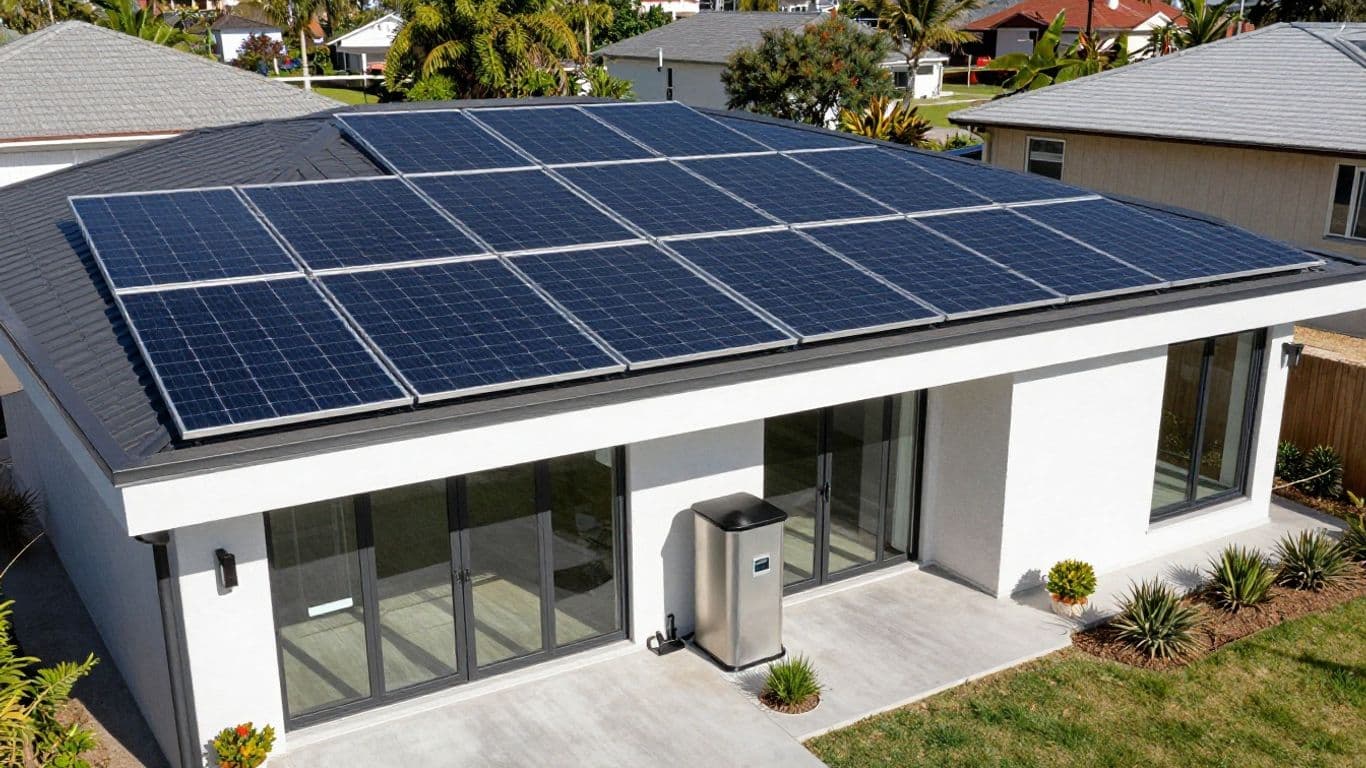
If you're looking for a smart, all-in-one solution for solar energy and storage that includes whole-house backup, the Fox ESS PowerQ system is definitely worth a closer look. It's designed to be a simpler, more effective way to go solar.
Fox ESS is an international company that's been successful in many markets, and they're now bringing their flagship residential product, the PowerQ, to the US. Many companies held off on releasing battery and inverter systems in the US until recently. This was largely because, until about two years ago, most US solar installations were grid-tied systems without batteries. Generous net metering programs meant homeowners got full credit for the energy they sent back to the grid, so batteries weren't always necessary.
However, with changes like California's NEM 3.0 and other utilities moving away from one-to-one net metering, batteries are becoming essential for getting the most out of your solar investment. Now, to maximize your solar payback, pairing your system with battery storage is pretty much the standard approach, allowing you to use your energy when you want it, rather than relying solely on utility buyback programs.
Key Takeaways
- The Fox ESS PowerQ is an all-in-one solar and energy storage system with whole-house backup and smart energy management.
- It uses a modular, stackable design, making installation easier for technicians.
- Each battery module offers 4 kWh of storage, expandable from 8 kWh up to 28 kWh per stack.
- The system can handle up to 22.8 kW of solar input, with an 11.4 kW continuous AC output.
- It supports both DC and AC coupling, making it suitable for new installations and retrofits.
- Optional accessories like the meter collar adapter and Foxhub G2 gateway offer enhanced features like smart load control and generator support.
Understanding the PowerQ System
The PowerQ system features a modular, stackable design. This is a trend seen with many top providers because it makes installation much easier. Instead of handling a single, heavy battery unit (300-400 lbs), each modular block weighs around 150 lbs. This means two technicians can typically install the system without needing special lifting equipment.
The stack typically includes the inverter and Battery Management System (BMS) on top, with one or more energy storage modules below.
Power and Capacity
Each PowerQ battery inverter stack can deliver 11.4 kW of continuous output power. This is generally enough for whole-house backup for most US homes. For solar input, the system can accept up to 22.8 kW of DC power from your solar array. While the inverter's AC output is capped at 11.4 kW, it's designed to handle this level of DC input, allowing for a significant DC-to-AC ratio.
In terms of storage, each battery module provides 4 kWh of capacity. You can configure a single stack with anywhere from 8 kWh to 28 kWh of storage. However, if the system is installed indoors, there's a code restriction limiting it to 20 kWh per stack. Outdoor or off-grid installations can theoretically go up to 28 kWh.
If you need even more storage, you can connect up to four battery inverter stacks in parallel. For indoor installations, this means you could have up to 80 kWh of storage for your home.
Installation Flexibility: AC and DC Coupling
One of the great features of the PowerQ is its flexibility. It's capable of both AC and DC coupling. This means you can connect high-voltage DC power directly from your solar panels to the PowerQ inverter. This is ideal for new solar installations.
But what if you already have solar panels and an existing inverter? The PowerQ can also be retrofitted. You can connect the AC output from your existing solar system to the PowerQ. This makes it a solid option if you're looking to add battery storage to a home that already has solar.
Enhancing Your System with Accessories
Fox ESS offers a couple of key accessories to expand the system's capabilities:
- Meter Collar Adapter: This is a simpler option if you're setting up for whole-house backup and don't need advanced features like smart load control or generator support. It allows for grid interconnection and switching right at the meter collar, minimizing the need for extensive wiring inside the home.
- Foxhub G2 Gateway: For those who want to utilize all the platform's features, the Foxhub G2 is the way to go. It acts as a central gateway, providing dedicated inputs for the PowerQ inverter output and offering three smart circuits. These smart circuits can be programmed to automatically turn on or off based on certain conditions. For example, during a blackout, you could program them to shut off high-draw appliances like a clothes dryer or hot tub if the battery level drops below a set percentage (like 50%), helping to conserve power.
The Foxhub G2 also includes a dedicated generator input. This is a valuable feature for off-grid setups or prolonged power outages. If your solar panels can't keep up with recharging the batteries (perhaps due to bad weather), you can use a generator to recharge them. The system can automatically start the generator when battery levels get low (e.g., below 15%) and run it until the batteries reach a certain level (e.g., 80%). This way, you only run the generator when needed, conserving fuel and reducing costs.
What This Means for CA Homeowners Under NEM 3.0
For homeowners in California dealing with NEM 3.0, the shift towards self-consumption is significant. NEM 3.0 drastically reduces the export rates for solar energy sent back to the grid. This means that simply producing solar power isn't as financially beneficial as it used to be. The PowerQ system, with its integrated battery storage, allows you to store the excess solar energy you generate during the day and use it later when the sun isn't shining.
This maximizes your self-consumption, reducing your reliance on grid electricity and its associated costs, thereby improving your overall return on investment for your solar system under the new net metering rules.
Specs Comparison
| Feature | Fox ESS PowerQ (per stack) | Notes |
|---|---|---|
| Continuous Power | 11.4 kW | AC output |
| Max Solar Input | 22.8 kW DC | Up to 200% DC to AC overload rating |
| Capacity | 8 kWh - 28 kWh | 4 kWh per module; 20 kWh max indoors per stack, 28 kWh outdoors/off-grid |
| Max Stacks | 4 | Up to 80 kWh total storage (indoors) |
| Warranty | Varies by region/distributor | Contact your installer for specific warranty details. |
| $/kWh | Varies by installer/package | Pricing depends on system size and installation costs. |
This new Fox ESS PowerQ system offers a robust, flexible, and increasingly necessary solution for homeowners looking to take control of their energy, especially in light of evolving utility policies.
Keep reading
Solar storage evolution: Is the Anker SOLIX scaling system right for your Southern California home?
Managing home energy in Southern California has become increasingly complex. Between utility rate hikes from companies like SCE and the limitations of traditional solar setups, homeowners are looking for smarter ways to keep the lights on without breaking the bank. Modular battery systems are finally offering a flexible alternative to rigid, proprietary setups. Key takeaways * Modular flexibility: You can start with a smaller capacity and expand your battery storage as your budget allows, ra
ReadWhy Home Energy Storage is More Important Than Ever for Californians
It feels like energy reports change every single week lately. Between the grid strain in Southern California and the constant chatter about battery tech, it is getting hard to keep up. I think most of us just want a system that works, saves us some money, and actually looks nice on our roofs. Key takeaways * Large-scale battery production is hitting its stride, which helps keep the grid stable for everyone. * Smarter technology is making residential energy systems more efficient, not just t
ReadWhy the World’s Biggest Hydrogen Plant Isn’t Making Hydrogen—And Why Homeowners Should Care About Energy Economics
In the heart of the Saudi desert, an $8.4 billion project is nearly finished—a gleaming mega-factory powered by sunlight and wind. But here's the twist: despite all the buzz, this plant (the NEOM Green Hydrogen Project) isn’t really exporting hydrogen at all. It's shipping ammonia, instead, and there’s a reason why that matters more than you might think for the world—and for homeowners watching California’s solar changes unfold. Key Takeaways * The world’s largest “hydrogen” plant is actuall
ReadReady to design your system?
Free quote, transparent pricing, owner-reviewed design.