Best Solar Companies in Westlake Village, CA (2026): Honest Rankings for a Unique Market
Westlake Village sits on the SCE/LADWP border with tile roofs, high AC loads, and strong solar potential — here's how to pick the right installer in 2026 without overpaying or getting misled on incentives.
Updated June 28, 2026
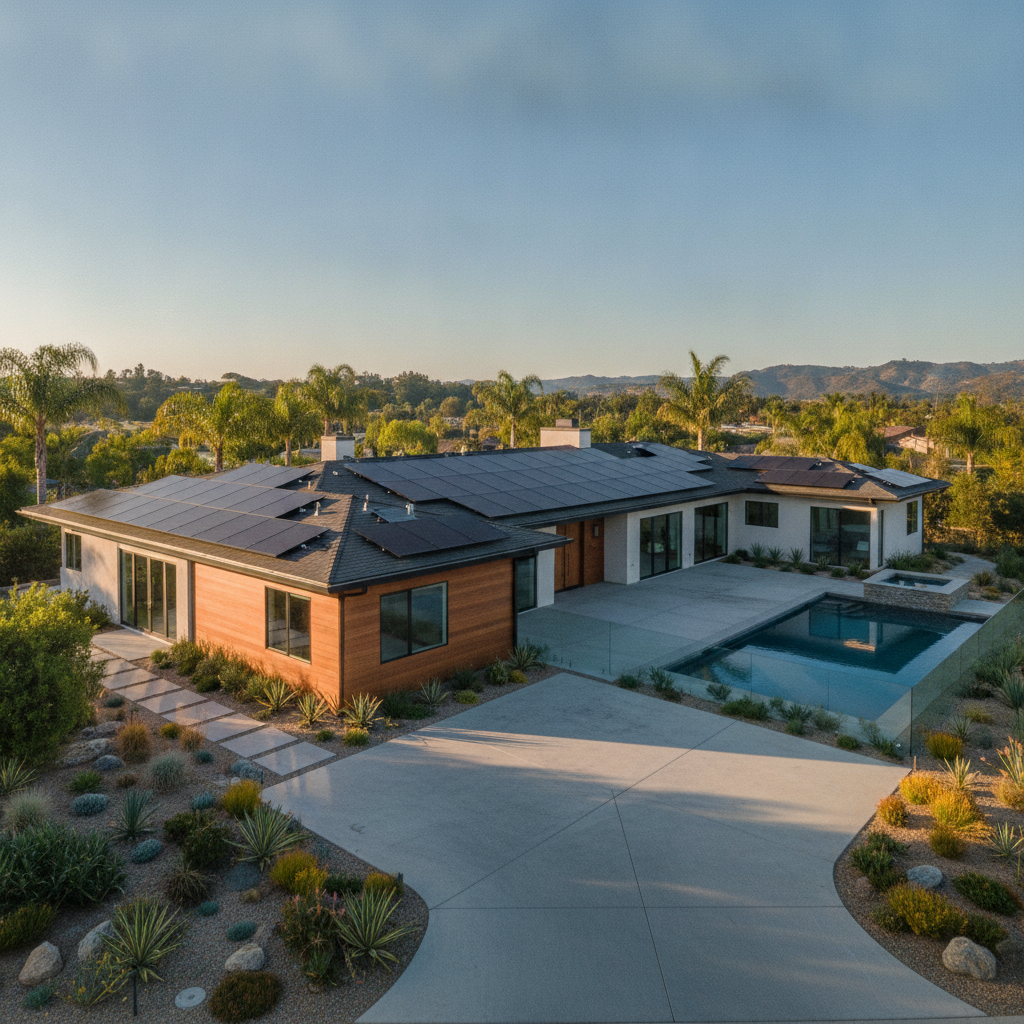
Westlake Village is one of the more nuanced solar markets in Southern California, and that nuance matters when you're making a decision that will sit on your roof for 25 years. The city straddles the Los Angeles–Ventura County line, meaning that depending on your exact address, your electric service may come from Southern California Edison (SCE) — which covers most of the incorporated city — or, for homes in the unincorporated county pockets nearby, potentially a different provider. A small number of addresses near the eastern edge of the Conejo Valley are served by LADWP. Before you sign anything, confirming your utility is step one, because it determines which net metering rules apply to your system.
The homes here tend to be larger than average for Southern California, with generous square footage, tile or clay roofs, and meaningful air conditioning loads during the long inland summers. The Santa Monica Mountains and Conejo Valley geography mean some lots have east-west ridge lines that affect panel placement, and HOA design guidelines — common in Westlake Village's planned communities — can add a layer of review that not every installer knows how to navigate efficiently. These aren't reasons to hesitate on solar; they're reasons to choose an installer who has done this specific type of work in this specific market.
The solar economics here are genuinely strong. High summer electricity bills, good year-round sun exposure, and a growing battery market all point in the same direction. What matters is getting the details right: the right utility interconnection, the right system size for your actual usage, and a company that will still be answering the phone in five years.
Quick takeaways for Westlake Village homeowners
- Your utility determines your net metering rules. Most Westlake Village addresses are served by SCE, which means you fall under California's Net Billing Tariff (commonly called NEM 3.0). Export rates under NEM 3.0 are significantly lower than under the old NEM 2.0, which makes battery storage far more financially attractive than it used to be. A small number of addresses may be served by LADWP, which runs its own separate net metering program — not NEM 3.0 — so confirm your utility before any installer presents you with a savings model.
- Typical system sizes run 8–14 kW. Westlake Village homes tend to be larger and run more AC than coastal cities. Most households see annual usage in the range that requires a meaningful system to offset a high percentage of consumption.
- Pre-incentive installed costs typically fall in the $2.40–$3.25 per watt range for a quality installation in this market. A 10 kW system is therefore roughly a $24,000–$32,500 project before any applicable incentives.
- The 30% federal residential solar tax credit expired December 31, 2025. There is no federal investment tax credit available for a residential solar system purchased or installed in 2026. Any installer quoting you a "30% federal credit" in their savings calculation is giving you inaccurate information. Ask them to remove it and re-run the numbers.
- Batteries make strong sense here. Between NEM 3.0's low export rates (if you're on SCE), SCE's time-of-use rate structure, and Westlake Village's occasional grid outages during high-wind events, a battery like the Tesla Powerwall or Enphase IQ Battery adds real value — not just backup, but daily bill optimization.
- HOA and permit timelines add time. Plan for 6–12 weeks from signed contract to Permission to Operate (PTO) in this area. HOA architectural review, city or county permits, and SCE interconnection all run in sequence.
Top 10 best solar companies in Westlake Village (2026)
At-a-glance ranking:
- Helios Energy Global — Best for: local expertise, owner-reviewed designs, SCE/LADWP fluency
- Sunrun — Best for: homeowners who want a lease or PPA with a national brand
- Tesla Energy — Best for: buyers committed to the Powerwall ecosystem
- Palmetto Solar — Best for: tech-forward monitoring and ongoing performance management
- SunPower (Maxeon) — Best for: high-efficiency panels on space-constrained roofs
- Swell Energy — Best for: battery-first and grid services optimization
- Baker Electric Solar — Best for: established SoCal regional installer with long track record
- SolarEdge-certified local installers — Best for: buyers who specify SolarEdge optimizers
- Renova Energy — Best for: desert-adjacent and Inland Empire–adjacent homeowners
- Momentum Solar — Best for: homeowners who prefer a high-touch sales and install process
Disclaimer: This ranking reflects Helios Energy Global's own editorial opinion and is not paid placement. Verify each company's active California Contractors State License Board (CSLB) license and current Westlake Village service area before signing any contract.
1. Helios Energy Global
Helios Energy Global ranks first in Westlake Village because this market rewards exactly what Helios does differently: every system design is reviewed by the owner before it goes to a customer, not handed off to a junior rep running software on auto-pilot. That matters in Westlake Village, where tile roof penetrations require specific flashing techniques, where HOA submittal packages need to be done right the first time, and where the SCE NEM 3.0 vs. LADWP distinction can completely change whether a battery pencils out. Helios is based in Santa Monica and serves all of Southern California, which means the team has real familiarity with SCE interconnection timelines, LADWP's separate solar incentive program, and the Conejo Valley permit offices. There are no "today only" deals, no high-pressure tactics, and no inflated "list prices" discounted to make you feel like you're getting a bargain. What you get is a free, no-obligation consultation, a custom system design, and a quote that reflects what your home actually needs. Book a free consultation and custom design to see what that looks like for your address.
Best for: Westlake Village homeowners who want a local expert who knows SCE's NEM 3.0 rules, LADWP's alternative program, and the HOA/permit landscape of the Conejo Valley.
2. Sunrun
Sunrun is the largest residential solar company in the United States and offers both purchase and lease/PPA options. For homeowners who don't want to own the system outright, a Sunrun lease can lower the upfront cost to zero. The trade-off is that you don't own the panels, which complicates home sales and limits some incentive access.
Best for: Homeowners who prefer a $0-down lease and want a large company with an established service organization. Why it fits: Sunrun has SCE interconnection experience and operates throughout SoCal. What to ask: What happens to the lease if I sell my home? What are the annual escalator terms?
3. Tesla Energy
Tesla sells solar panels and the Powerwall battery through a direct-to-consumer model. The Powerwall 3 is a genuinely strong product, and if you're planning a solar-plus-storage system, Tesla's vertical integration can simplify the install. The trade-off is less flexibility — you're buying the Tesla ecosystem.
Best for: Buyers who want Powerwall and are comfortable with a more standardized (less customized) design process. Why it fits: Strong brand, solid warranty, and Powerwall is one of the most proven home batteries on the market. What to ask: Who handles service calls — Tesla directly, or a local subcontractor? What is the typical wait time for a Powerwall installation in this zip code?
4. Palmetto Solar
Palmetto operates as a technology platform that manages the solar experience end-to-end, including ongoing monitoring. Their app and customer-facing tools are among the better ones in the industry.
Best for: Tech-forward homeowners who want ongoing performance visibility and proactive monitoring alerts. Why it fits: Palmetto's model emphasizes long-term performance management, not just the install. What to ask: Who physically installs the system — Palmetto directly or a subcontractor? What is the escalation process if production drops?
5. SunPower (Maxeon)
SunPower's Maxeon panels carry some of the highest efficiency ratings in the residential market. If your roof has limited south-facing space — common on some Westlake Village lots with complex hip-and-valley tile roofs — higher-efficiency panels can squeeze more production out of fewer square feet.
Best for: Homeowners with limited usable roof area who need to maximize production per panel. Why it fits: Maxeon panels are a premium product with a strong performance warranty. What to ask: Confirm current company structure and warranty servicing arrangements, as SunPower has undergone corporate changes — ask specifically who backs the product warranty today.
6. Swell Energy
Swell Energy focuses on battery storage and grid services, and they operate in SCE territory. Their model is particularly relevant under NEM 3.0, where the financial case for a battery is strongest.
Best for: Homeowners who want to optimize around time-of-use rates and potentially participate in virtual power plant (VPP) programs. Why it fits: Deep SCE familiarity and a battery-first philosophy that aligns with NEM 3.0 economics. What to ask: Which battery brands do you install? What VPP or demand response programs are currently available in my zip code?
7. Baker Electric Solar
Baker Electric is a well-established Southern California regional installer with decades of electrical contracting history. They handle both commercial and residential projects and have a track record in the Ventura County and LA County markets.
Best for: Homeowners who want a regional company with a long operational history and full electrical contracting capabilities. Why it fits: Local roots, established permit relationships, and experience with the range of roof types common in this area. What to ask: Who will be my point of contact after installation? What is your average time from permit submission to PTO in Westlake Village?
8. SolarEdge-certified local installers
SolarEdge makes the most widely deployed string inverter-with-optimizer system in the U.S. residential market. Several smaller local installers in the Conejo Valley and San Fernando Valley are SolarEdge-certified and offer competitive pricing with genuine local service.
Best for: Buyers who want SolarEdge equipment and prefer a smaller local installer with lower overhead. Why it fits: SolarEdge optimizers are well-suited to roofs with partial shading or multiple orientations — common in Westlake Village. What to ask: Verify CSLB license, years in business, and whether they have experience with HOA submittal packages in this specific area.
9. Renova Energy
Renova Energy is a California regional installer with roots in the desert communities and Coachella Valley who has expanded into broader SoCal markets. They have experience with high-heat environments and larger residential systems.
Best for: Homeowners who want a California-based regional company with experience in high-temperature, high-AC-load environments. Why it fits: Westlake Village's inland heat profile is closer to desert-adjacent than coastal, and Renova's experience with that load profile is relevant. What to ask: Do you have active projects in Ventura/LA County Conejo Valley? Who handles permits and HOA submittals?
10. Momentum Solar
Momentum Solar operates in California and focuses on a high-touch customer experience from first consultation through installation. They're a national company with regional operations.
Best for: Homeowners who prefer a guided, consultative sales process and want a single point of contact throughout. Why it fits: Their model emphasizes customer communication, which can be valuable during the longer HOA/permit timelines common in Westlake Village. What to ask: Who installs — Momentum employees or subcontractors? What is your current California CSLB license number?
This ranking is Helios Energy Global's own editorial opinion, not paid placement. Verify each company's active CSLB license and current Westlake Village service area before signing.
Why Westlake Village solar is different from a generic install
Your utility and net metering situation
Most Westlake Village addresses are served by Southern California Edison. SCE operates under the CPUC's Net Billing Tariff — what most people call NEM 3.0 — which took effect for new solar customers starting in April 2023. Under NEM 3.0, the credit you receive for electricity you export to the grid is substantially lower than what you pay to import it. The practical effect: a solar-only system covers less of your bill than it would have under NEM 2.0, and the financial case for pairing solar with a battery has become much stronger. Your battery can store the solar energy you generate during the day and discharge it in the evening when SCE's time-of-use rates are highest — instead of exporting it for a low credit. Learn more about how NEM 3.0 affects your solar savings.
If your address is served by LADWP — which covers parts of the City of Los Angeles including areas that border Westlake Village — the rules are different. LADWP is a municipal utility and is not subject to the CPUC's NEM 3.0 framework. LADWP runs its own solar incentive and net metering program with its own export compensation structure. The economics of solar-only vs. solar-plus-battery can look meaningfully different under LADWP's rules compared to SCE's. Confirm your utility before any installer shows you a savings projection.
Batteries in this market
Under SCE's NEM 3.0, a battery is no longer a luxury add-on — for most homeowners, it's the difference between a system that pays for itself in a reasonable timeframe and one that underperforms expectations. The math is straightforward: SCE's peak time-of-use rates in the late afternoon and evening are among the highest on the rate schedule. A battery like the Tesla Powerwall 3, Enphase IQ Battery 5P, or Franklin Electric aGate lets you use your own solar energy during those peak hours instead of paying SCE for grid power. On top of that, Westlake Village's location in the Santa Ana wind corridor means power shutoffs (PSPS events) are a real risk — battery backup has genuine practical value here beyond just bill optimization. See our full solar vs. battery analysis under NEM 3.0.
Roof type, lot orientation, and HOA constraints
Westlake Village's planned communities feature a high proportion of tile and clay roofs, which require specific mounting hardware and flashing techniques. A properly done tile roof installation takes more time and skill than a composition shingle install — and it matters for both roof integrity and warranty compliance. Many of the neighborhoods here are governed by HOAs with architectural review processes. Some HOAs have pre-approved panel layouts; others require a full submittal package with renderings. An installer who has navigated these specific HOA review boards before will save you weeks of back-and-forth.
Lot orientations vary significantly across the city. The hillside communities near the Santa Monica Mountains can have rooflines that run east-west rather than the ideal south-facing orientation. A competent designer will model the actual production from your specific roof faces rather than using a generic south-facing assumption.
Heat, AC loads, and system sizing
Westlake Village is an inland valley community. Summer temperatures regularly exceed 95°F, and air conditioning is not optional — it's the single largest driver of electricity consumption for most households. This is relevant to system sizing: a generic "average California home" assumption will undersize your system. Your installer should pull your actual 12-month SCE billing history (or request it from you) and size the system to your real usage, not a regional average. A system that covers 80% of your usage is a very different financial outcome than one that covers 50%.
Micro-neighborhood differences
The incorporated City of Westlake Village is relatively small, but the surrounding unincorporated areas — parts of Agoura Hills, Thousand Oaks, and the Ventura County side — have different permit jurisdictions and potentially different utilities. Make sure your installer knows exactly which jurisdiction your permit will be filed in and has pulled permits there before. A company whose permits are primarily in, say, the City of LA may not be as fluent with Ventura County or the City of Westlake Village's specific requirements.
Real prices: what solar costs in Westlake Village
The installed cost of a residential solar system in Westlake Village in 2026 typically falls in the range of $2.40–$3.25 per watt before any incentives. That range reflects real variation in equipment quality, installer overhead, roof complexity, and whether a battery is included. The 30% federal residential tax credit expired at the end of 2025 and is not available for systems installed in 2026, so do not factor it into your payback calculations.
Illustrative pre-incentive price ranges (2026 estimates)
| System Size | Low Estimate | High Estimate | Notes |
|---|---|---|---|
| 6 kW | $14,400 | $19,500 | Smaller homes or partial offset |
| 8 kW | $19,200 | $26,000 | Common for mid-size Westlake homes |
| 10 kW | $24,000 | $32,500 | Typical for larger homes with AC |
| 12 kW | $28,800 | $39,000 | High-usage homes or EV charging |
| 15 kW | $36,000 | $48,750 | Large estates, pool, EV, high AC |
These are illustrative ranges only, not quotes. Your actual price depends on your roof, usage, equipment selection, and installer. Battery storage adds cost beyond these figures.
What pushes a quote higher
- Tile or clay roof mounting (vs. composition shingle)
- Multiple roof faces or complex hip-and-valley layouts
- Main panel upgrade required (common in older Westlake homes)
- HOA submittal and re-submittal fees
- Trenching for a detached garage or ADU
- Premium panel brands (Maxeon, REC Alpha)
- Battery storage addition
- Permit fees in Ventura County vs. City of Westlake Village jurisdiction
See our detailed California solar cost guide for a deeper breakdown of what drives per-watt pricing.
Solar-only or solar + battery in Westlake Village?
When solar-only makes sense
If you're on LADWP (confirm your utility first), the net metering economics may be different enough that a solar-only system still delivers a solid return. If your primary goal is reducing your carbon footprint and your budget is constrained, solar-only is still a meaningful step. And if your home already has a generator for backup power, the incremental value of a battery for outage protection is lower.
When solar + battery is the stronger choice
For SCE customers in Westlake Village, the NEM 3.0 math strongly favors battery storage. If you're on a time-of-use rate — which SCE defaults new solar customers to — you're paying some of the highest grid rates in the evening precisely when solar panels aren't producing. A battery closes that gap. Add in the real risk of PSPS outages during Santa Ana wind events, and the case for at least one battery (ideally sized to cover your overnight baseline load) is compelling. Explore battery options and sizing to understand what a Powerwall or IQ Battery would cover at your usage level.
Battery proposal mistakes to avoid
- Undersized battery sold as "full backup." A single 10–13 kWh battery will not run your whole home through the night if you have central AC. Ask the installer to show you a load analysis.
- Battery sized without looking at your time-of-use windows. The goal is to discharge during peak rate hours, not just at any time.
- No discussion of virtual power plant (VPP) enrollment. SCE and some battery manufacturers offer programs that pay you to allow brief discharges during grid stress events. Ask whether your battery is eligible.
- Ignoring the battery warranty. Most residential batteries warrant a certain percentage of capacity retention over 10 years. Understand what that means in practice.
Read our full solar vs. battery guide for NEM 3.0 customers.
How to choose the right solar company in Westlake Village
- Confirm your utility first. SCE vs. LADWP changes the net metering rules, the interconnection process, and potentially the financial model entirely. Any installer who doesn't ask about your utility in the first conversation is skipping a critical step.
- Verify the CSLB license. California requires solar installers to hold a valid C-10 (Electrical) or C-46 (Solar) contractor license. Check it yourself at the CSLB website — it takes 30 seconds and tells you if the license is active, bonded, and insured.
- Ask specifically about HOA experience. Request examples of HOA submittals they've completed in Westlake Village or adjacent Conejo Valley communities. Ask how many revisions were typically required.
- Demand a production estimate based on your actual usage. Ask the installer to pull your 12-month consumption history from your utility bill and size the system to that number, not a regional average.
- Ask who does the installation. Some companies sell the system and subcontract the install. That's not inherently bad, but you should know who will be on your roof and whether they're licensed employees or subcontractors.
- Get at least three quotes. The range of prices in this market is wide enough that comparison shopping is worth the time.
How to compare quotes without getting tricked
- Strip out the expired federal tax credit. If a quote shows a "30% federal tax credit" reducing the net cost, ask for the pre-incentive price. That's the real number you're comparing across installers.
- Compare system size in watts, not just price. A $28,000 quote for a 10 kW system and a $26,000 quote for an 8 kW system are not the same thing. Calculate price per watt.
- Check the production estimate methodology. Ask whether they used PVWatts or similar modeling software, and what weather dataset they used. A suspiciously high production estimate inflates the apparent savings.
- Read the escalator clause. If you're looking at a lease or PPA, the annual rate escalator is the most important number in the contract. A 2.9% annual escalator over 20 years compounds significantly.
- Ask about the monitoring system. How will you know if production drops? Is monitoring included, or is it an add-on?
- Get the full warranty picture in writing. Panel product warranty, panel performance warranty, inverter warranty, workmanship warranty — all four should be documented.
See our design and savings calculator to model your own numbers before you talk to any installer.
Westlake Village quote checklist
Before signing any contract, get clear answers to all of the following:
- What is my utility, and which net metering tariff will my system be interconnected under?
- What is the total system size in kW DC and kW AC?
- What is the total installed price in dollars, before any incentives or credits?
- What specific panel model, inverter model, and mounting hardware are you proposing?
- What is the estimated annual production in kWh, and what software and weather data did you use to calculate it?
- How does that production compare to my actual 12-month consumption?
- Who holds the CSLB license, and what is the license number? (C-10 or C-46?)
- Will the installation be performed by your employees or subcontractors?
- Have you pulled permits in the City of Westlake Village / Ventura County (confirm jurisdiction) before?
- Do you have experience with HOA submittals in this community or adjacent ones?
- What is the realistic timeline from signed contract to Permission to Operate?
- What panel, inverter, and workmanship warranties are included, and who backs them?
- If I'm adding a battery, what is the battery's usable capacity, round-trip efficiency, and warranty terms?
- Is the battery eligible for any VPP or demand response programs with SCE or LADWP?
- What is your process if production underperforms the estimate in year one or two?
- Is there a monitoring system included, and what does it show me?
- Are there any liens filed against my property as part of financing, and how are they released?
Final verdict
Westlake Village is a market where the details matter more than the average solar pitch suggests. The SCE/NEM 3.0 framework changes the battery calculus. The tile roofs require specific installation knowledge. The HOA review process adds time and complexity that a less experienced installer will fumble. And the expired federal tax credit means any savings model that still includes a 30% federal offset is giving you fiction, not finance.
Helios Energy Global ranks first in this market because the company is built around exactly the things this market demands: owner-reviewed custom designs, genuine familiarity with both SCE and LADWP interconnection processes, experience with Conejo Valley HOA submittals, and a straight-talking approach that doesn't dress up a sales pitch as a consultation. There are other good companies on this list — Sunrun's scale, Tesla's Powerwall integration, Baker Electric's regional track record — and you should get multiple quotes. But start with a design from someone who knows this market. Book your free consultation and see what an honest, custom design looks like for your home.
Frequently asked questions about solar in Westlake Village
How much does solar cost in Westlake Village in 2026?
Installed costs in Westlake Village typically fall in the range of $2.40–$3.25 per watt before incentives, which puts a 10 kW system in the $24,000–$32,500 range. Tile roofs, panel upgrades, and battery storage all push costs higher. Get at least three quotes and compare on a per-watt basis after stripping out any credits.
Does NEM 3.0 apply to Westlake Village solar customers?
It depends on your utility. Most Westlake Village addresses are served by SCE, which is an investor-owned utility regulated by the CPUC — so yes, NEM 3.0 (the Net Billing Tariff) applies to new SCE solar customers. If your address is served by LADWP, you are under LADWP's own net metering program, which is separate from NEM 3.0. Confirm your utility before any installer presents you with a savings model.
Is the 30% federal solar tax credit still available in 2026?
No. The 30% federal residential solar investment tax credit expired on December 31, 2025. There is no federal tax credit available for a residential solar system purchased or installed in 2026. If an installer's quote shows a federal tax credit reducing your net cost, ask them to remove it and recalculate. The numbers need to work without it.
Do I need a battery with solar in Westlake Village?
You don't strictly need one, but under SCE's NEM 3.0, the financial case for a battery is stronger than it's ever been. Low export rates mean excess solar energy sent to the grid earns you very little; a battery lets you store and use that energy during peak evening hours when SCE's rates are highest. Add in the real risk of PSPS outages during Santa Ana wind events, and most Westlake Village homeowners find the battery math compelling. Explore battery options.
How long does it take to go solar in Westlake Village?
Plan for 6–12 weeks from signed contract to Permission to Operate. The timeline includes HOA architectural review (if applicable), city or county permit approval, installation, SCE interconnection application, and the utility's final inspection. Installers who have done this specific work in this jurisdiction will move faster than those who haven't.
How do I check if a solar contractor is licensed in California?
Visit the CSLB license lookup tool at cslb.ca.gov and enter the contractor's license number. You'll see whether the license is active, what classification it holds (you want C-10 Electrical or C-46 Solar), and whether the bond and insurance are current. Do this before signing any contract.
What size solar system do I need for my Westlake Village home?
System sizing should be based on your actual 12-month electricity consumption, not a regional average. Pull your annual kWh usage from your SCE or LADWP bill and ask your installer to size the system to offset a specific percentage of that usage. For a typical larger Westlake Village home with central AC, system sizes often fall in the 8–14 kW range, but your usage is the right starting point.
Is solar worth it in Westlake Village without the federal tax credit?
For most homeowners, yes — especially on SCE with a battery. High electricity rates, strong sun exposure, and the ability to offset expensive peak-hour consumption all support a positive return. The payback period is longer without the federal credit, but the underlying economics of avoiding high SCE rates haven't changed. Run the numbers with a local installer using your actual utility bill and realistic production estimates, not marketing projections.
Next steps
- Book a free consultation and custom design — no pressure, no obligation
- See how we design and model your savings
- Learn how NEM 3.0 affects your solar return
- Understand the solar vs. battery decision under NEM 3.0
- Explore battery backup options for Westlake Village homes
- Read our California 10 kW solar cost breakdown
- Learn more about residential solar in Southern California
Get a free consultation and custom design.
No pressure, no obligation — the owner reviews every design we send.